
Frame Rate: Understanding the Impact of Frame Rate on Video Interpretation
Surveillance video does not always have a frame rate that allows for continuous or near continuous recording of an event. Frame rates may be reduced to account for multiple camera feeds, rotating camera activation, reducing the amount of data that is captured, etc. When the frame rate is reduced, the viewer must be...

Using Watermarks to Authenticate Video Images
Another method of authenticating video images is to show scientifically that an image has not been altered or conversely that alteration has occurred. One such method has been the use of watermarking which modifies the digital video content by the superimposition of a watermark. As Erik Berg noted:[i] Digital watermarks are generally used...
Authentication and the Use of Audit Trails
In order for video evidence to be admitted at trial, the tendering party must prove that the images are authentic. There are a number of technical approaches that are available to assist with video authentication. This post will address the use of audit trails as part of the process of establishing authentication. Proper...
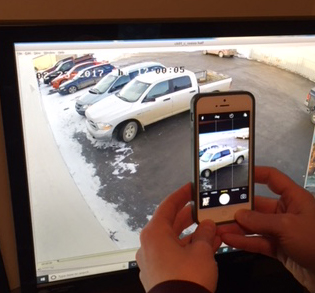
Authenticating Monitor Photographs
The proper method of presenting surveillance video evidence at trial is to show all relevant authenticated images that have been exported from the DVR or server. Occasionally, the only evidence of the original video that exists is photographs taken of the video monitor at the surveillance location. This less than ideal situation can...

Video Evidence
The admissibility of video evidence at trial is contingent upon the tendering party establishing the authenticity of the video. Authentication is the process of proving that the video images are in fact that which is purported. It must be established that the video accurately depicts what is shown and that no material changes...