The War Against Truth
The primary goal of criminal investigations and prosecutions, both internationally and domestically, is to search for the truth. Achieving this laudable goal is challenging given that we live in a world where there is an active war against truth. Over the past few years, there has been a marked increase in the number...
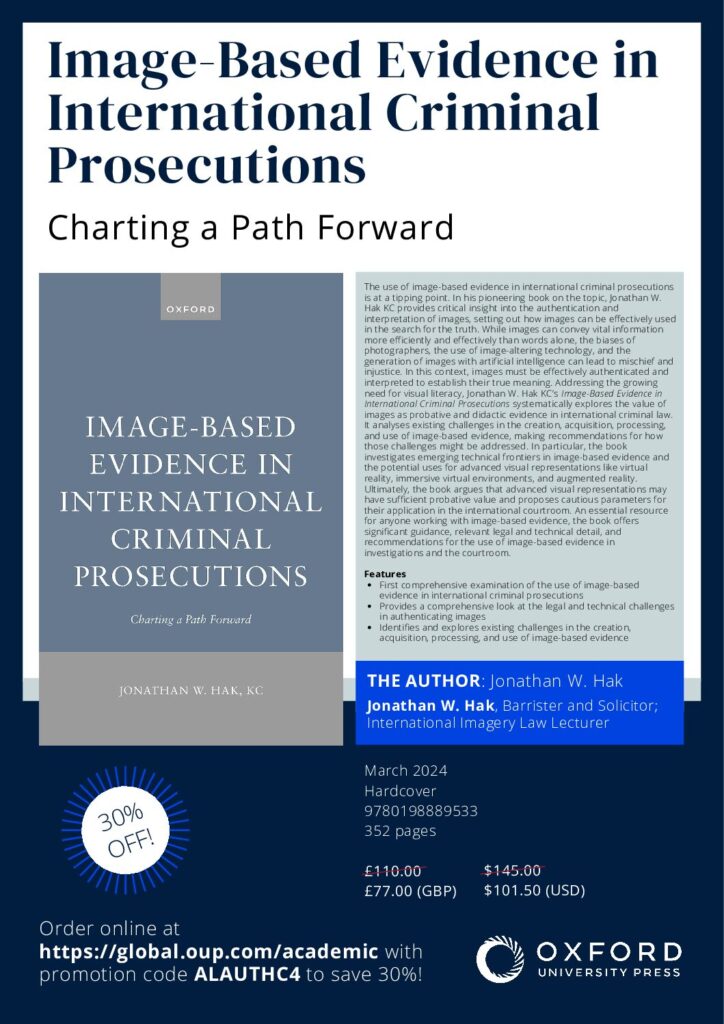
“Image-Based Evidence in International Criminal Prosecutions: Charting a Path Forward” is available for purchase!
After many years of leading and relying upon image-based evidence in the courtroom, teaching international imagery law in several countries, and recently being awarded a PhD from Leiden University in the Netherlands on the use of non-textual evidence in international criminal prosecutions, I am pleased to announce that my book Image-Based Evidence in...
Troubling Trend in Expert Image Comparison Evidence in Canada?
A recent Canadian case has highlighted an apparent issue that is affecting how some courts are assessing the probative value and admissibility of expert image comparison evidence. This article reviews this recent case in the context of previous rulings and recommends how image comparison evidence should be presented to the court by experts...
Image Comparison Evidence in the UK: Have Things Changed?
I research, write, and lecture about international imagery law. In preparation for upcoming courses in the UK this summer, I was reviewing recent case law and came across a March 2022 case from the Court of Appeal (Criminal Division) that piqued my interest. It is consistent with previous case law but appears to...
Chickens Come Home to Roost When Covert Videos Alleging Animal Mistreatment are Ruled Admissible
Covert video recordings taken at the behest of an animal rights organization provide potentially valuable evidence in a prosecution alleging animal cruelty. In R. v. Elite Farm Services Ltd., 2021 BCSC 1583 (British Columbia Supreme Court), the defence challenged the admissibility of video evidence that the Crown sought to tender at trial. The purpose...
Case Study: Trial Judge Performs Image Comparison When Crown Fails to Present Expert Evidence
In R. v. Ermine, 2018 SKQB 77 (Saskatchewan Court of Queen’s Bench), the trial judge was placed in the position of having to conduct his own video analysis because the Crown failed to call the necessary expert evidence. In this case, three individuals robbed a bar. Two of the robbers pled guilty earlier and...
Always Have a Plan “B” For Your Courtroom Presentation
In my “Courtroom Testimony for Expert Witnesses” course, I discuss the importance of multi-modal learning. While the delivery of an expert witness’s evidence will, by necessity, be largely testimonial, it is essential that the expert witness incorporate other methods of delivering the evidence as well in order to be a truly effective communicator....
Narrating Video Evidence: Helping to Tell the Story
Rarely can we expect the trier of fact to watch video evidence and fully understand both the overall picture of what happened and specific pertinent details. The trier of fact does not have the luxury of relevant training and ample time to examine the media. It is for this reason that forensic video...
Case Study: Expert Witness Claims Expertise Not Actually Present
In a previous post entitled “Interpreting Video Images: The Role of the Forensic Video Analyst,” I discussed the important role that a forensic video analyst can play in providing expert interpretive evidence in court. The analyst’s job is to assist attorneys and the court in drawing informed and correct conclusions regarding the video...

Image Comparison Evidence: The Canadian Experience
Image comparison evidence has been used frequently in Canadian courts where favorable rulings have been made on the use of such evidence in identifying vehicles, clothing and other objects, and people. It has been subjected to the same type of challenges as seen in the United States and the more harmful the evidence...