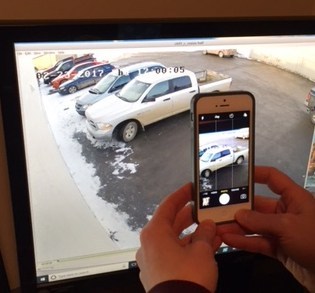
Should Video Recordings of Monitors be Ruled Authentic?
In order to make sound, informed decisions about the content of videos tendered as evidence, it is preferable to have the original recording, or a copy that has been verified to be accurate, available for viewing and examination. Ordinarily, this is achieved by exporting the video files from the camera, DVR, server, computer...
Appellate Ruling on Authentication: Speculation of Impropriety Not Enough
Should video evidence be ruled inadmissible because an expert raises potential concerns regarding its authenticity? Mere speculation is insufficient to dislodge a prima facie showing of threshold authenticity according to the Court of Appeals of Oregon in State v. Sassarini, 300 Or.App 106 (Or.App., 2019), 452 P.3d 457. The Facts A dispute between neighboring property owners...
New “Forensic Talks” episode featuring Jonathan W. Hak, Q.C.
The New Year started with a wide-ranging interview by Eugene Liscio on several topics relating to expert witness testimony, the use of forensic science in the courtroom, digital media, and more. For an informative 45 minute chat, please have a peek!

The Admissibility of Video and Photographs Posted to Social Media: Inconsistent Court Rulings
Video and photographs posted to social media sites often have value for the prosecution. The challenge posed by social media evidence is authenticity and even though the law is quite well established, the application of it varies from case to case. In this article, I will review three US cases with disparate rulings....

Federal Court Rejects Opinion of Video Expert on Use of Force Due to Expert Exceeding Qualifications
Experts are professionally and ethically bound to limit opinions to their own area of expertise. Despite this clear demarcation, some experts purposely exceed those limits, often to the detriment of their client. The recent federal court case of Pettit v. Hill, 2018 WL 4100705, 107 Fed. R. Evid. Serv. 390 (United States District Court, W.D. Oklahoma) is...
Federal Court Rejects Evidence of Forensic Video Analyst as Opinion “Largely Based on Conjecture and Speculation”
In Melton v. Klee, 2019 WL 1315723, the United States District Court, Eastern District of Michigan, Southern Division, considered a pro se petition for a writ of habeas corpus following the petitioner’s conviction for assault with intent to rob while armed. The petitioner’s conviction arose from the attempted robbery of the victim outside her home in Michigan. During the...
Recommendations for Expert Image Comparison Evidence in the United Kingdom in Light of the FSR Regulatory Notice “Image Enhancement and Image Comparison: Provision of Opinion”
Introduction I attended the meeting of the Forensic Digital Media Analysis Working Group, organized and presented by the Chartered Society of Forensic Sciences, in Birmingham, UK on October 21, 2019. One of the topics discussed was the state of general image comparison evidence in the UK in light of the FSR’s Regulatory Notice 01/2019...
FSR responds to “Evaluation of the Forensic Science Regulator’s recommendations regarding image comparison evidence”
In my August 26, 2019 article posted on this website, I included the evaluation I conducted of the UK Forensic Science Regulator’s directives to change image comparison evidence in the UK. The Regulator recently responded to my article and her response has been published in Forensic Science International: Synergy. Her response can be...
Anonymous Videos Used to Take Children Away from Mother in Child Welfare Trial: Colorado Court of Appeals Weighs in on Authentication
In People In Interest of M.V., 432 P.3d 628, 2018 WL 5988705, the Colorado Court of Appeals was asked to review the decision of a trial judge ordering that a mother’s children be adjudicated as dependent and neglected, thereafter imposing a treatment plan for the mother and removing the children from her custody. Central to...
“Evaluation of the Forensic Science Regulator’s recommendations regarding image comparison evidence”
I have recently published an article in the scientific journal Forensic Science International: Synergy. Here is the abstract: Expert image comparison evidence can be a vastly helpful tool in the search for the truth, a central tenet of the criminal justice system. This evidence assists the court in determining the relationship between a...