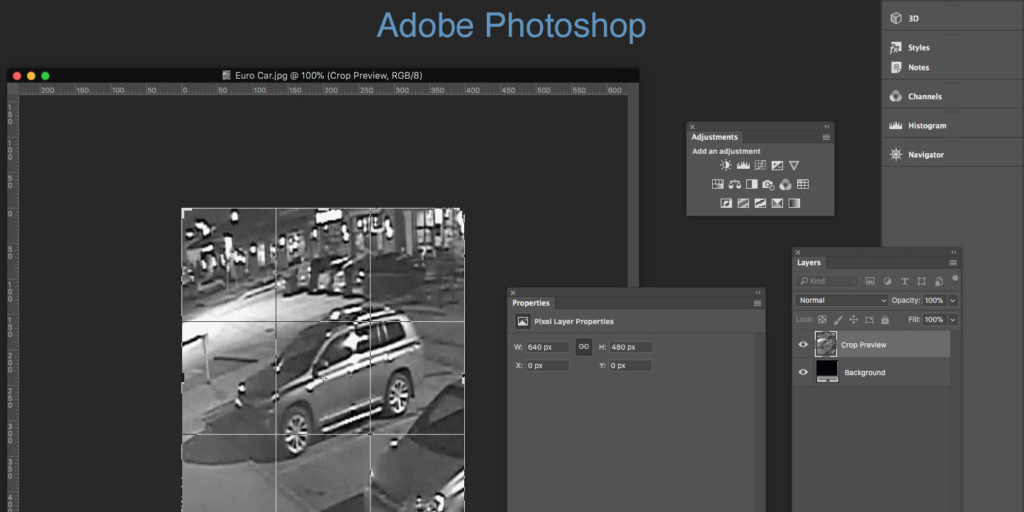
Editing of Images: When Do You Cross the Line?
Related to concerns with authentication, one of the most pervasive suspicions regarding digital image evidence is that the images have been surreptitiously edited in such a manner as to present a false picture of what really happened. Such editing may include deletion or insertion of images, changing the order in which images appear,...
Image Clarification: Not a Bar to Admissibility
One of the most commonly litigated issues regarding digital image evidence is the propriety of and limits to image clarification. Parties who tender clarified images argue that the clarified images allow the viewer to see more detail in the images while the opposing party urges the court to rule the images inadmissible on...

Image Accuracy: Why the Correct Aspect Ratio Matters
Part of the process of authenticating a video image is to show that the image is an accurate depiction of what the camera recorded. One important technical issue bearing upon image accuracy that must be considered is aspect ratio (the height to width ratio of the image). It is not uncommon to see...
Making the Most of Waiting to Testify
It is recommended that an expert witness arrive at the courtroom about fifteen minutes before court is scheduled to commence unless other arrangements have been made with the attorney. This will allow the expert an opportunity find the correct courtroom and to be comfortable. Anxiety over being late or lost can negatively affect...
Becoming Qualified as an Expert Witness for the First Time
Becoming qualified as an expert witness for the first time is a significant accomplishment for an expert. External validation by a judge launches the expert to the next level as the expert enters a forum wherein he/she will be able to explain in detail the work that has been done in the case...
Preparing for Trial: Meetings with Attorneys
Pre-trial meetings with the attorney who will be presenting the expert’s evidence in court are not a luxury. They are essential. Though it may be at times challenging to arrange, it is recommended that the expert insist on a meeting. Every time I have a case that involves expert evidence, I have at...
Expert Witnesses: The Need to Remain Current
Expert witnesses are professionally and ethically obligated to remain current in their field of expertise. Parties who retain experts and the courts that rely upon their testimony are entitled to expect that they are receiving the latest information from their experts. When I am tendering an expert witness before the court, in the...
What Should be in an Expert Report?
The culmination of an expert’s work is the expert report. The expert report represents the final written product of the expert and serves a number of important purposes. First, it documents the methodology and work of the expert, thereby outlining for counsel what work the expert has undertaken, what processes were used and...
Social Media Images: Authentication Challenges
The widespread use of handheld cameras and the penchant for posting video to social media have created significant evidentiary challenges from an authentication perspective. For example, cameras mounted on motorcycles that are driven in a highly dangerous manner occasionally result in the posting of such videos to a social media site, ostensibly for...
Using Digital Signatures to Authenticate Video Images
Watermarks were discussed in an earlier post as a method of authenticating video images or showing that image alteration has occurred. Watermarks come with limitations. A more commonly used method for authenticating digital images is the use of digital signatures whereby digital signatures are generated in an authentication system and stored on a...