Case Study: Expert Witness Claims Expertise Not Actually Present
In a previous post entitled “Interpreting Video Images: The Role of the Forensic Video Analyst,” I discussed the important role that a forensic video analyst can play in providing expert interpretive evidence in court. The analyst’s job is to assist attorneys and the court in drawing informed and correct conclusions regarding the video...
Interpreting Video Images: The Role of the Forensic Video Analyst
Do you see what I see? Looking at video evidence does not mean that you will actually see all that the video has to offer. Expert interpretation of video evidence is often required in order to properly evaluate and understand the images. Relying on video evidence without expert interpretation risks the failure to...

Image Comparison Evidence: The Canadian Experience
Image comparison evidence has been used frequently in Canadian courts where favorable rulings have been made on the use of such evidence in identifying vehicles, clothing and other objects, and people. It has been subjected to the same type of challenges as seen in the United States and the more harmful the evidence...
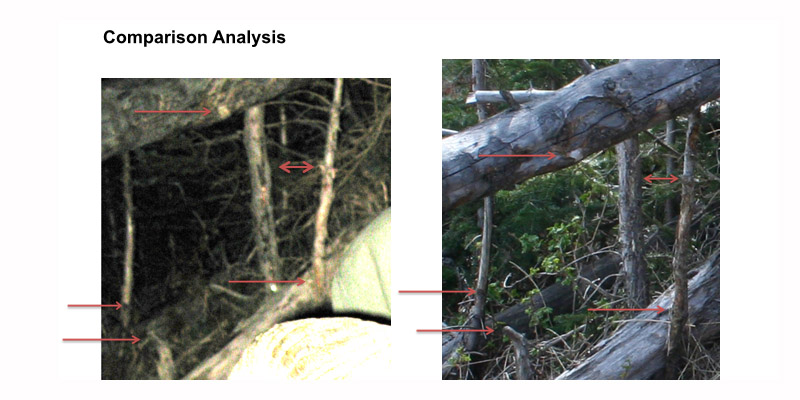
Image Comparison Evidence: The United States Experience
Image comparison evidence can be a very powerful form of evidence in court. This kind of expert forensic video analysis evidence is frequently challenged by opposing attorneys. Through this evidence, using the objective lens of the camera and the analyst’s trained eye and detailed analysis, the trier of fact may be better positioned...

Are you Qualified to be an Expert Witness? What is the Test?
In an earlier post entitled “Becoming Qualified as an Expert Witness for the First Time” I set out the four key requirements that must be met in order for expert evidence to be admissible. The fourth such requirement is that the proposed expert must have the necessary qualifications for the tendered field of...
Frame Rate: Understanding the Impact of Frame Rate on Video Interpretation
Surveillance video does not always have a frame rate that allows for continuous or near continuous recording of an event. Frame rates may be reduced to account for multiple camera feeds, rotating camera activation, reducing the amount of data that is captured, etc. When the frame rate is reduced, the viewer must be...
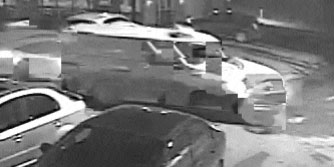
Image Compression: Are Our Eyes Deceiving Us?
Digital compression of video images is a common occurrence. There are legitimate and laudatory reasons for such compression. Among those reasons are the fact that more data can be stored in a smaller amount of storage space, data can be easily transmitted electronically, and data can be searched more readily. However, the first...
Editing of Images: When Do You Cross the Line?
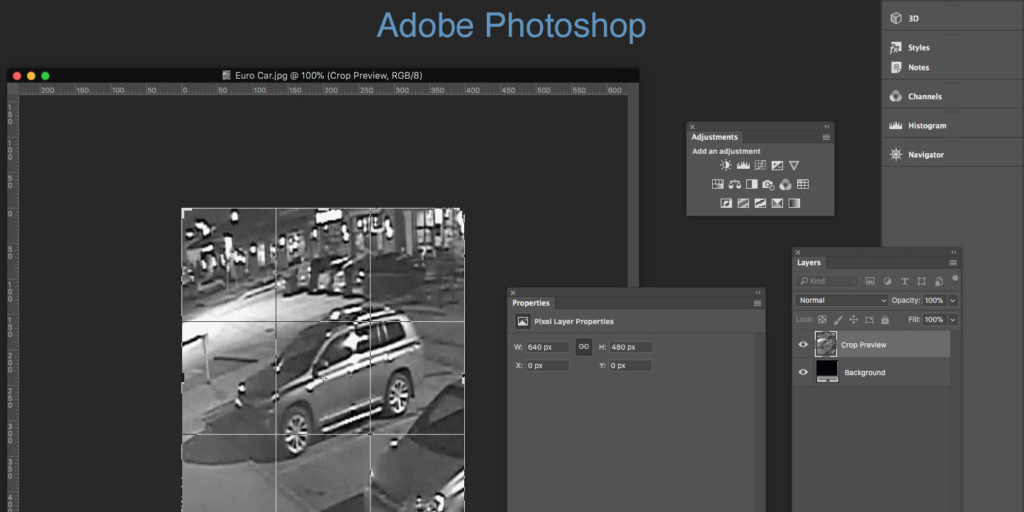
Related to concerns with authentication, one of the most pervasive suspicions regarding digital image evidence is that the images have been surreptitiously edited in such a manner as to present a false picture of what really happened. Such editing may include deletion or insertion of images, changing the order in which images appear,...
Image Clarification: Not a Bar to Admissibility
One of the most commonly litigated issues regarding digital image evidence is the propriety of and limits to image clarification. Parties who tender clarified images argue that the clarified images allow the viewer to see more detail in the images while the opposing party urges the court to rule the images inadmissible on...

Image Accuracy: Why the Correct Aspect Ratio Matters
Part of the process of authenticating a video image is to show that the image is an accurate depiction of what the camera recorded. One important technical issue bearing upon image accuracy that must be considered is aspect ratio (the height to width ratio of the image). It is not uncommon to see...